If you’re weighing flooring options before a remodel or a sale, you’ve probably asked yourself: does luxury vinyl plank actually boost your home’s value, or is it just a budget trend? It’s an important question when you’re trying to get the most out of every dollar you invest.
Here’s the good news. LVP has shed its old reputation as a “cheap alternative.” Today it’s one of the most practical, appealing flooring choices for homeowners who care about style and return on investment. Done right, it can make your home more attractive to buyers and more livable for you right now.
In this guide, we’ll cover what makes LVP valuable, how it compares to other flooring types, and what to weigh before installing it in your own home, so you can make a confident, informed decision.
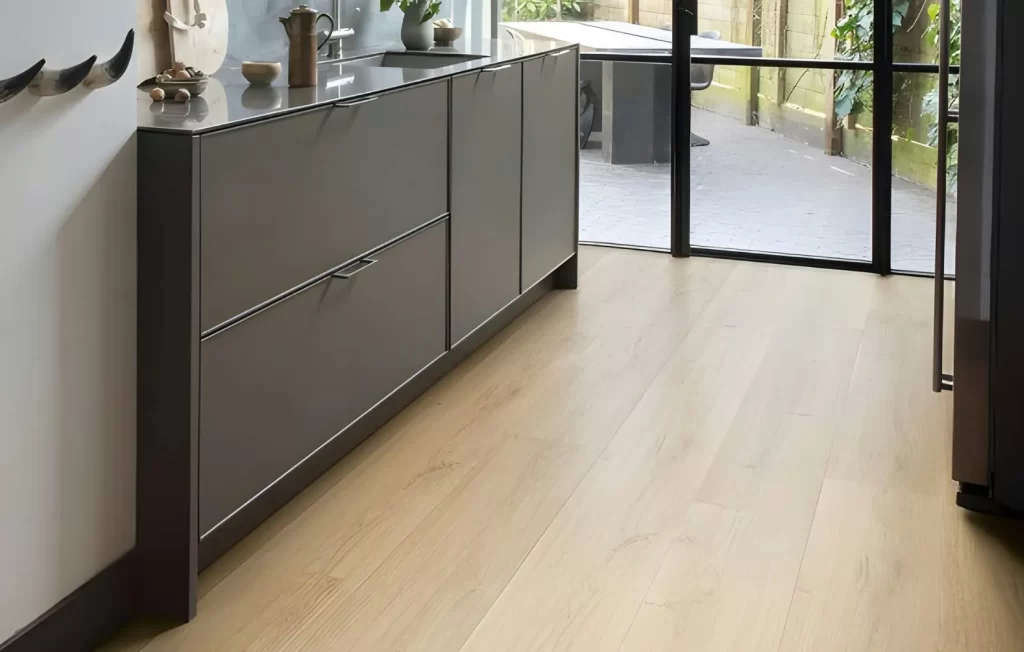
Table of Contents
- What Is LVP?
- Does LVP Improve a Home’s Value?
- How Does Luxury Vinyl Plank Compare to Other Flooring Types When It Comes To Improving a Home’s Value?
- 3 Ways LVP Improves a Home’s Value
- In Which Spaces Does LVP Improve a Home’s Value the Most?
- Commonly Asked Questions About LVP and Home Values
- Interior Motives Flooring: Auburn’s Trusted Flooring Contractor Since 1989
What Is LVP?
Luxury vinyl plank (LVP) is a multi-layer synthetic flooring designed to mimic the look of natural hardwood, while offering far more durability and water resistance. It’s built from a printed design layer, a protective wear layer, and a rigid core, which together create a floor that looks like wood but performs very differently underfoot.
Homeowners are drawn to LVP for a few key reasons:
- Waterproof construction, ideal for kitchens, bathrooms, and mudrooms
- Scratch and dent resistance, which holds up well against pets and kids
- Low maintenance, needing only regular sweeping and mopping
- Realistic wood and stone finishes, without the cost of natural materials
- Offers a comfortable, softer feel underfoot compared to tile or hardwood
Does LVP Improve a Home’s Value?
In short, yes, especially when it replaces flooring that’s outdated, worn, or damaged. Buyers today are drawn to homes that feel move-in ready, and flooring is one of the first things they notice, often before they even register the paint color or layout.
That first impression carries real weight. A tired, dated floor can make buyers mentally subtract from their offer to cover the cost of replacing it. A fresh, high-quality LVP floor does the opposite. It signals that the home has been well cared for, which builds buyer confidence before they’ve even reached the kitchen. Explore luxury vinyl plank installation in Auburn, WA, with our team at Interior Motives Flooring.

A Quick Pro-Tip Regarding LVP Quality
Here’s a mistake worth avoiding: choosing LVP based on price alone. The cheapest options tend to have a thin protective layer that wears out quickly, and both buyers and home inspectors can spot it.
If resale value is part of your goal, look for a wear layer in the 12 mil to 20 mil range for residential use. That thickness is what keeps the floor looking flawless after years of foot traffic, pets, and furniture.
At Interior Motives Flooring, we help homeowners pick a product built to last, not just to look good the day it’s installed.

How Does Luxury Vinyl Plank Compare to Other Flooring Types When It Comes To Improving a Home’s Value?
Every flooring type has its strengths, but not all of them hold up the same way when it comes to buyer appeal and long-term value.
- Carpet feels warm and inviting, but it’s a magnet for allergens and shows wear fast. Buyers increasingly gravitate toward LVP instead, drawn to its clean look and the fact that it’s so much easier to keep looking new.
- Tile holds up beautifully in wet spaces and is nearly indestructible, but it can feel cold and hard underfoot. LVP closes that gap, giving you the same wood or stone look with a warmer, softer feel to walk on.
- Laminate has come a long way, but moisture is still its weak point. LVP simply outperforms it in kitchens, bathrooms, and any space where spills or humidity are a factor.
3 Ways LVP Improves a Home’s Value
#1: It Enhances Your Home’s Visual Appeal
Today’s home buyers are rarely looking for a project. They’re shopping for a home that already feels finished, and floors are one of the fastest ways to lose that feeling. A stained carpet or a cracked tile floor doesn’t just look tired; it makes buyers start doing math in their head about what it’ll cost to fix, and that math tends to show up in a lower offer.
LVP flips that script by offering:
- A convincing wood look: Today’s printing technology reproduces the grain and texture of pricier natural materials closely enough that most buyers won’t clock the difference.
- A cohesive flow: Carrying one plank style from the kitchen into the living room and hallway makes the whole layout read as larger and more intentional.
- An instant reset: One of the quickest ways to erase a dated look, whether that’s worn carpet or an old vinyl sheet, is simply pulling it up and starting fresh with LVP.
That reset effect matters most in the moment a buyer first walks through the door. A floor that looks brand new sets the tone for the rest of the showing, and it’s often what turns a passive walkthrough into someone picturing their own furniture in the space.
#2: It’s Durable and Easy To Maintain
Consumer Reports’ Flooring Buying Guide notes that vinyl holds up especially well against wear, dents, and staining, and that its waterproof build makes it a solid substitute for tile in kitchens and bathrooms. For buyers weighing long-term upkeep, that combination is a real selling point.
What that looks like in daily life:
- Spills aren’t a crisis. A properly waterproofed floor shrugs off standing water instead of swelling or warping, which matters most in kitchens, bathrooms, and mudrooms.
- Pets and kids don’t wreck it. A quality wear layer absorbs the scuffs and impacts that would otherwise dent or scratch a softer material.
- Cleaning stays simple. A regular sweep and an occasional mop are enough, with no specialty products or deep-cleaning routines required.
#3: It’s a Budget-Friendlier Return on Investment Than Real Wood
Cost is where LVP really separates itself from real hardwood. Forbes Home estimates professional installation at roughly $4 to $13 per square foot, well below what solid wood typically runs, even though the finished look reads as comparably upscale.
That lower entry price doesn’t come at the expense of return. Industry estimates commonly put LVP’s payback in the 70 to 80 percent range, driven less by the material itself and more by what it does to a home’s overall impression: a newer, cleaner floor tends to lift how buyers rate the property’s condition as a whole.

In Which Spaces Does LVP Improve a Home’s Value the Most?
LVP works well throughout a home, but does it have equal bang for the buck in every room? No. A few spots consistently deliver the biggest payoff:
- Bedrooms and living rooms with aging carpet: Continuous, low-maintenance flooring here is an easy win with buyers, who appreciate not inheriting someone else’s worn carpet or trapped odors.
- Kitchens, bathrooms, and laundry rooms: These are the rooms where hardwood struggles. LVP’s waterproof build lets it deliver a wood-look floor in spaces where real wood would never work.
- Basements: Concrete subfloors bring moisture swings that most flooring can’t handle gracefully. LVP is built for exactly this kind of environment, which makes an unfinished basement into genuinely usable living space. Turning a basement into a space that is finished and buyers can envision using from day one can make a big impact.
Commonly Asked Questions About LVP and Home Values
What Features Should I Look for in LVP if My Main Goal Is Increasing Home Value?
Two specs matter most in the LVP you select if resale is the priority: the core and the wear layer.
A rigid core, like SPC (stone plastic composite), gives planks a solid, substantial feel that reads as quality underfoot. Pair that with a wear layer of at least 12 mil to 20 mil, and you’ve got a floor that resists the scuffs and dents buyers and inspectors notice first.
Interior Motives Flooring carries a curated selection of top LVP brands built to these standards, so you can shop with confidence knowing that every option on our floor meets the mark.
Will LVP Appraise the Same as Genuine Hardwood?
Not quite, at least on paper. Appraisers still classify solid hardwood as a permanent architectural feature with a slight edge in dollar-for-dollar value. That said, the gap has narrowed considerably as rigid-core LVP has improved.
What matters most to an appraiser is condition: a pristine, well-installed LVP floor will often appraise at a higher value than scratched, tired hardwood. LVP also tends to move homes faster, since it appeals directly to buyers who want style without high-maintenance upkeep.
Should I Choose LVP or LVT for The Best ROI?
Luxury vinyl plank isn’t the only vinyl option worth considering. Luxury vinyl tile, or LVT, is a close cousin that’s cut into tile shapes rather than long planks, and it’s built to resemble stone, slate, or ceramic rather than wood. Both deliver a strong return, so the better question is which one fits the room.
Luxury vinyl plank suits the continuous, wood-look flow of living rooms, hallways, and bedrooms. Luxury vinyl tile fits naturally in kitchens, bathrooms, and entryways, where a stone or tile look feels more at home. Many homeowners use both throughout the house, letting each room’s flooring match its purpose while keeping the overall look cohesive.
Is LVP a Good Investment for Selling My Home?
Usually, yes, particularly if what you have now is dated or showing damage. It’s one of the more cost-effective ways to refresh a home’s presentation before listing, without taking on the expense of a full hardwood installation.
What Type of LVP Improves a Home’s Value the Most?
Not every LVP style appeals equally to buyers. If your goal is broad, mainstream appeal rather than a bold personal statement, a few specific choices consistently perform best.
For the broadest buyer appeal, look for:
- Neutral wood tones, like oak, maple, or walnut
- Wide planks, around seven to nine inches
- Matte or low-gloss finishes
- A wear layer of 20 mil or greater
- Fully waterproof construction
- One consistent flooring style across main living areas
These choices tend to feel timeless rather than trendy, which matters most when you’re trying to appeal to as many potential buyers as possible.
Interior Motives Flooring: Auburn’s Trusted Flooring Contractor Since 1989
For decades, Interior Motives Flooring has helped Auburn homeowners choose flooring that looks beautiful and holds its value. As a family-owned, father-son company, we bring the personal attention of a small local business with the selection and pricing you’d expect from a big box store.
Whether you’re upgrading before a sale or simply ready for a floor you’ll love living with, our team can walk you through the right LVP options for your home and budget. Schedule a free in-home consultation, or stop by our Auburn showroom to see and feel your options in person.